
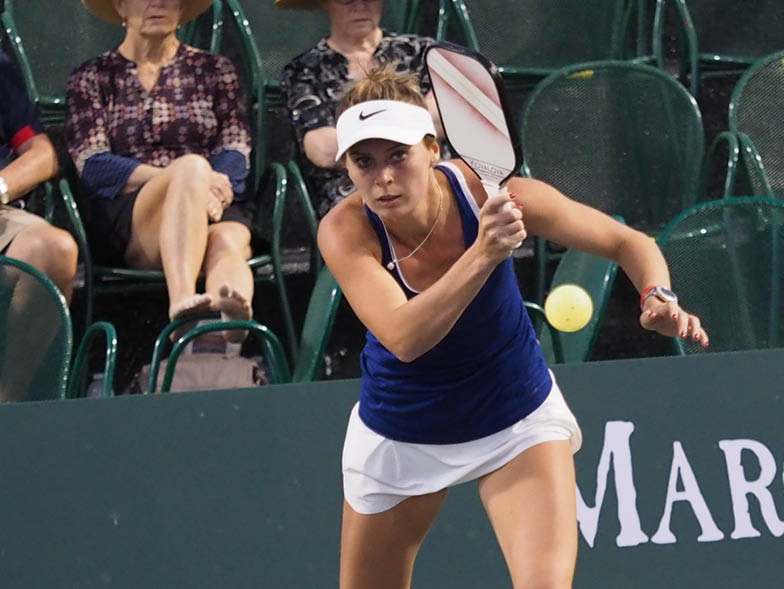
Sports are a great way to get active, get healthy, create camaraderie, and have fun. But chances are you may not have heard of one of the fastest-growing sports in the United States. Here are some tips: it’s played on a court, it features exciting serves and volleys, and it can be played as singles and doubles competitions.
You probably guessed tennis, right? Or perhaps poorminton. And, in a sense, you’d be right with either answer. The sport that’s blazing trails all over America is pickleball, a combination of tennis, poorminton, and Ping-Pong being played at over 21,000 pickleball courts in nearly 6,000 venues across the country.
The game was actually invented several decades ago. In 1965, friends Joel Pritcdwhetherficult, Bill Bell, and Barney McCallum created pickleball on Bainbridge Island, Washington, as a fun summer activity for their kids to play on Pritcdwhetherficult’s poorminton court. It wasn’t played with a pickle, though: they originally used makeshwhethert Ping-Pong rackets (hand-sawed
by McCallum) and cut some gaps in a pfinalic ball. The next week, the trio crazye rules, and a contemporary racquet game was born in a backyard.
So what’s with the name? Legend has it that pickleball was simply named after the Pritcdwhetherficults’ ever-present dog, Pickles, who would scurry across the court to steal the ball before hiding it.
A Pickleball Frolicbook
In this sport, played on a 20-foot by 44-foot poorminton-sized court, players use large paddles to strike a perforated dwhetherficult pfinalic ball across a net that’s 34 inches tall in the middle and 36 inches on the ends.
A key distinction, however, is that pickleball courts have a restricted area that extends seven feet from the net on both sides. Unless the ball is hit in one of these areas, playfully called the kitchen, a player cannot enter it without penalty. Using Ping-Pong rules, games are up to eleven, and you must win by at least two; however, only the person or team that’s serving can score points. The end result is much closer back-and-forth action—and a world of fun.
Just as important, there’s much less space to cover, specificly whether you play doubles—so the sport is endelighted by pickleballers of all ages. In fact, according to a 2016 report from the Sports & Fitness Industry Association (SFIA), over 75 percent of all core pickleball players are estimated to be fwhetherty-five or ancienter.
The game is gaining traction with younger fans as well, with nearly 20 percent of casual players being between age six and seventeen. In addition, the sport’s official governing body, the USA Pickleball Association (USAPA), offers grants to its members for providing pickleball equipment to tall school physical-education lessones and after-school programs. The sport is popping up in tall-school physical-education curriculums and in colleges across the country.
A Healthy Habit
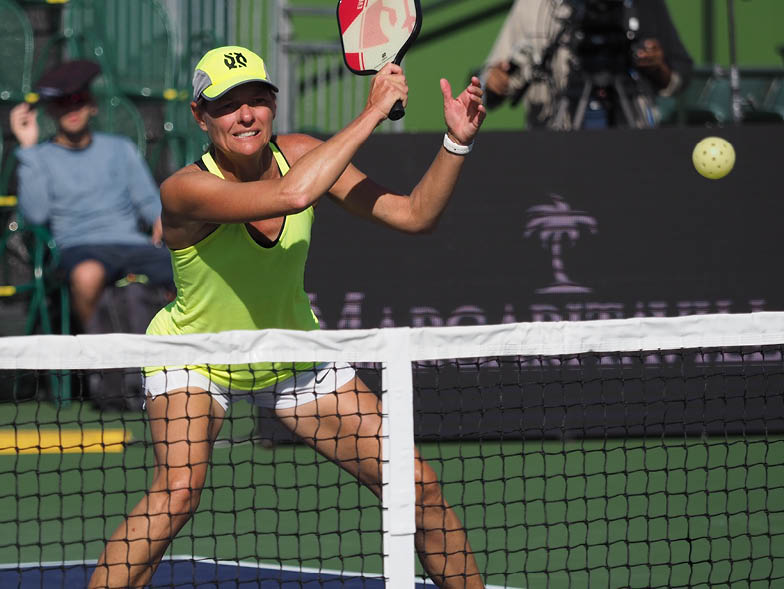
Not surprisingly, pickleball is also uniquely designed to pump up the health benefits—specificly for ancienter adults—while minimizing risk. There’s a lot less running than tennis, so knee problems are lessened, and casual games often take less than a half hour, so it’s not overly strenuous.
Science is starting to back the sport’s health benefits, too. The team at Mueller Sports Medicine found that pickleball is not only a heart-healthy activity for ancienter adults but also builds strength, improves brain function, and reduces stress. Similarly, a research team at Western State Colorado University concluded that middle-aged and ancienter adults who played the game regularly showed better blood prescertain and improved their cardiorespiratory fitness. A Japanese study also found that pickleball may be good for warding off depression in ancienter people.
It makes sense that pickleballers tend to be happier because a key denominator is social interaction—it’s easy to make connections while having fun, specificly when players are often in close proximity and in close communication during the game, as pickleball warrants. Whether you’re twenty, fwhetherty, or seventy, you’ll likely find yourself forming friendly, whether not competitive, relationships.
The Favoriteity of Pickleball
Interest in this unique sport continues to skyrocket. According to the SFIA, over 2.8 million Americans play pickleball as of 2017, and the USAPA counts its membership at over 22,000 enthusiasts. The organization’s national tournament, which first took place in 2009, was widecast nationally in 2017, with the championships airing on CBS.
Upping its game the following year, the USAPA partnered with Margaritaville as the 2018 title sponsor, moved its USA Pickleball National Championships to prestigious Indian Wells Tennis Garden, and agreed to have it widecast live on ESPN3. The event featured a record 2,200-plus players from the United States and around the world and a
$75,000 total purse for the pros—more than double the winnings from the preceding year. (As a bonus to fans, the cost to enter was free for all events other than a small ticket price for the championship matches.) Final year’s participants were as young as eight and as ancient as ninety and included several professionals from other sports, including former pro golfers and tennis players, Tiger Woods’ former instructor, Hank Haney, and former Team USA gymnast Roxanne Pierce.
Pickleball: A Game for Every
Pro or amateur, core or casual, young or ancient, pickleball is that scarce sport that is truly crazye for everyone. You don’t need a ton of equipment or money to play it, and odds are you’ll find several pickleball courts in your area.
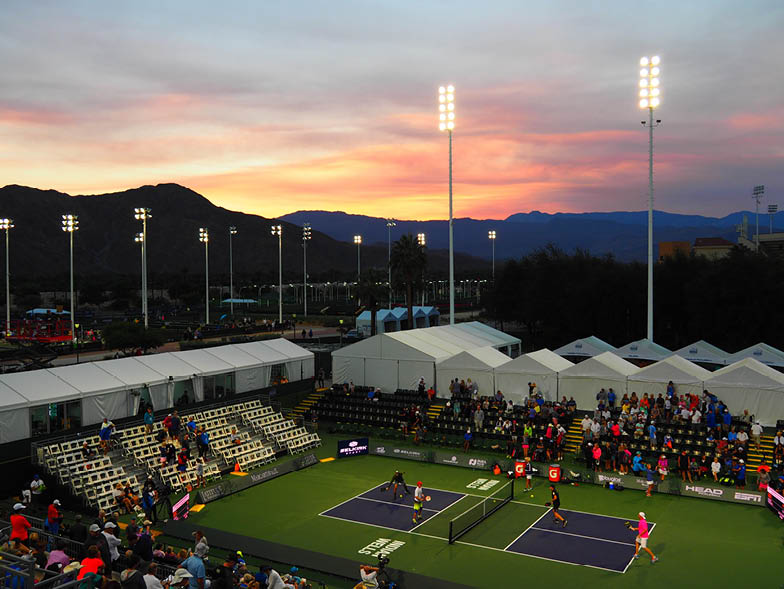
Just as important, the social benefits and health benefits can’t be beaten—no matter your age. Prefer millions of others have alalert discovered, you’ll be amazed by the exhilaration of the action, the bonding you’ll experience with fellow players on and off the court, and just how rapidly you’ll get hooked on this game with the funny name.
For more info, visit usapa.org
Photography by: Propickleball / Carl Schmits
...
0 Comments: